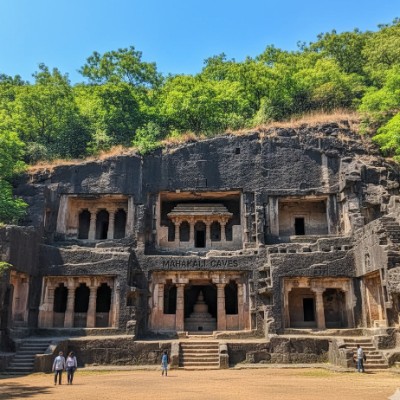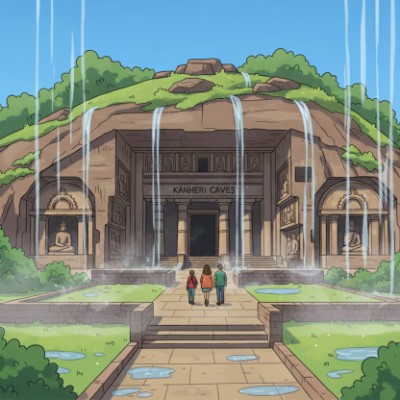
About Jogeshwari Caves, Mumbai Jogeshwari Caves in Mumbai is among the oldest Hindu cave temple complexes in India, representing the early phase of Shaivite rock cut architecture. Carved around the 6th century, the caves are dedicated to Lord Shiva and the goddess Jogeshwari, a powerful yogic form associated with the region. The site marks a crucial stage in the evolution of Indian cave temple design, preceding and influencing later masterpieces like the Elephanta Caves.
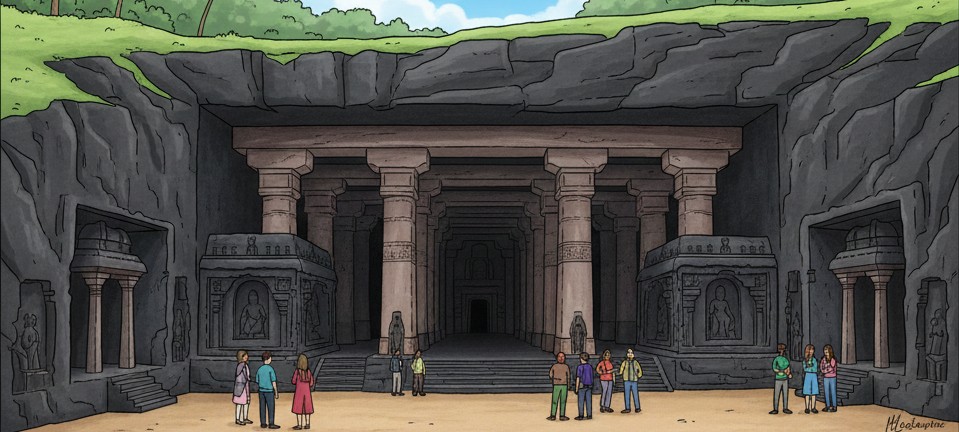
The complex features a long central corridor supported by rows of stone pillars, leading to a sanctum containing the linga. Several side chambers and sculpted niches branch from the main hall, showcasing early iconographic styles typical of the period. Though weathered, the architectural layout reveals a sophisticated understanding of spatial planning and religious symbolism.
Jogeshwari Caves are located within a densely populated residential area, which often surprises visitors approaching the site. However, once inside, the ambience shifts to a quiet interior marked by cool basalt surfaces, dim natural lighting and an ancient spiritual aura. The site continues to hold religious significance for locals, with occasional rituals observed within the sanctum.
Jogeshwari caves also attract archaeology enthusiasts, students and photographers drawn to its long passageway, symmetrical pillars and historic relevance. Despite limited maintenance and urban pressures, Jogeshwari Caves remain an important cultural landmark that preserves the early traditions of Hindu cave architecture in Mumbai.
Key Highlights
- One of India’s earliest Hindu cave temples carved in the 6th century
- Dedicated to Lord Shiva and goddess Jogeshwari
- Features long rock cut corridors, pillars and a central linga shrine
- Located in Jogeshwari East within a dense residential cluster
- Influenced later cave complexes like the Elephanta Caves
- Popular with history lovers, archaeology students and photographers